SNR 70.5+1.9
Constellation: Cygnus
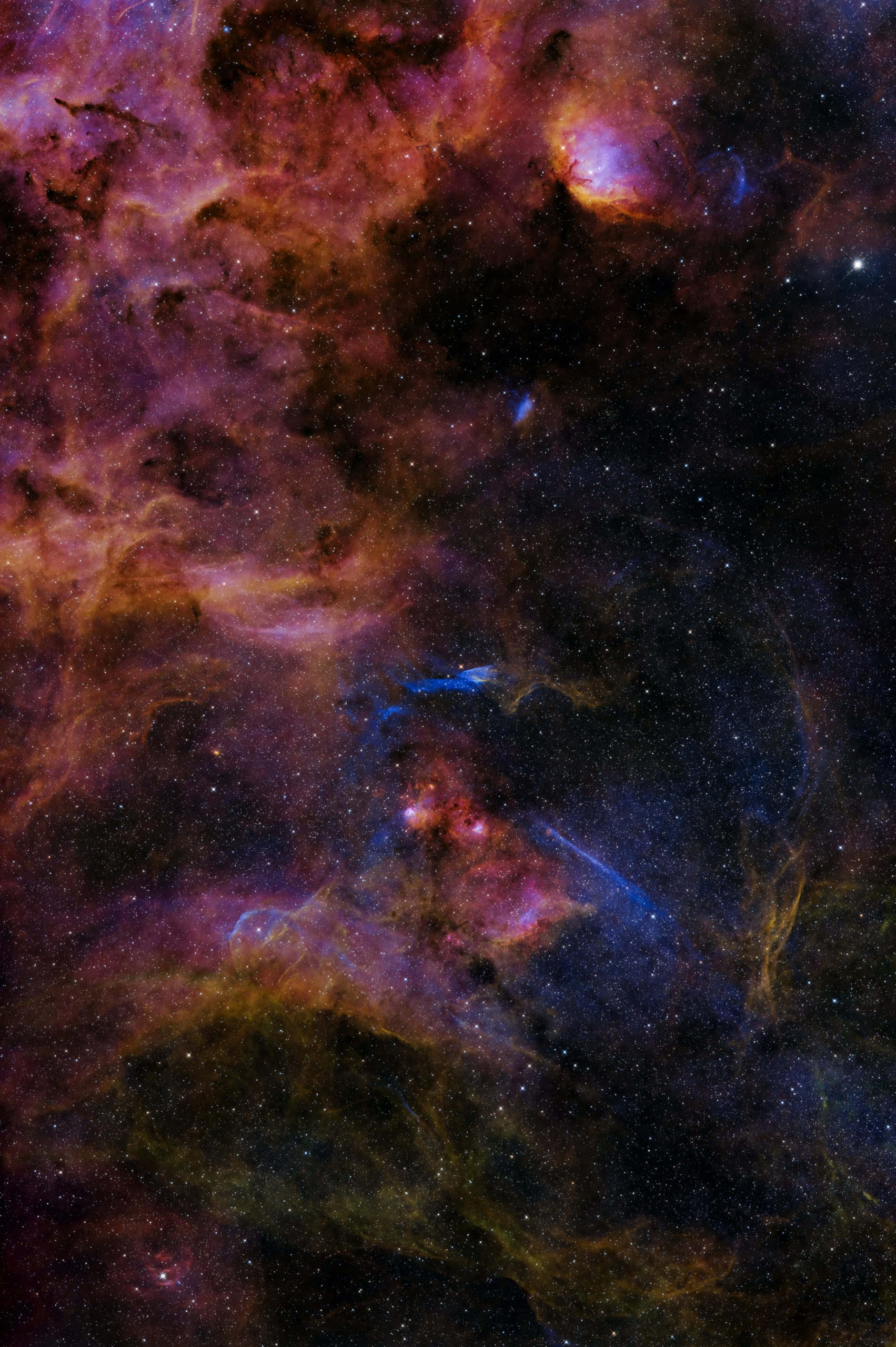
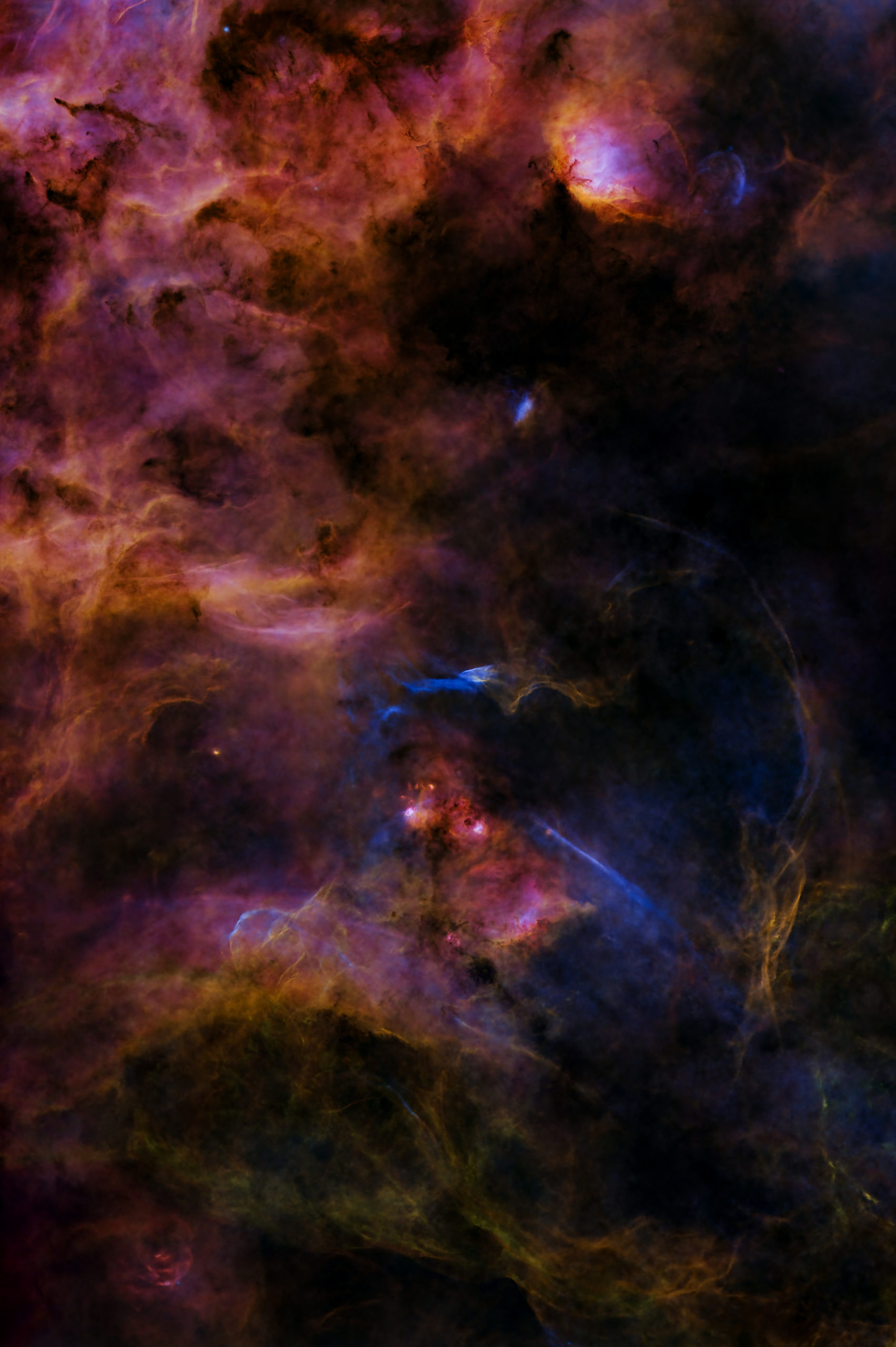
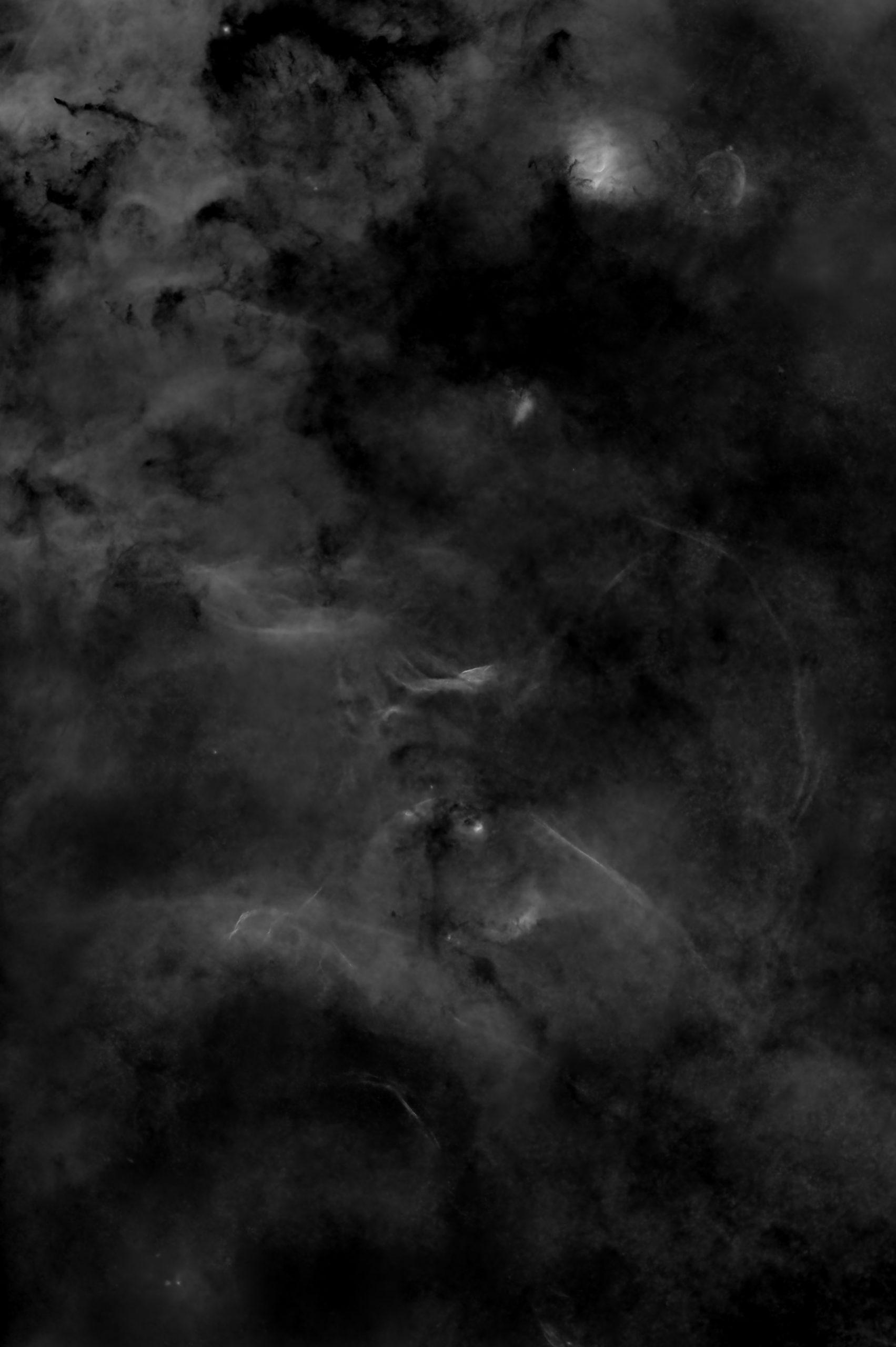
SNR 70.5+1.9 is a candidate supernova remnant in the constellation of Cygnus. It is likely that the distance to candidate SNR is less than 3’200 Ly. This object – the central blue object in the image – was first reported as an SNR candidate by Mavromatakis et al. [1] who write that its has the appearance of those expected of an evolved SNR, although non-thermal radio and X-ray emission have been detected. This wide-field image shows that the SNR candidate is part of a larger complex of fine line emission filaments, including Hα, [O III] and [S II], extending to the NW, West and SW (best seen in the starless image and the emission line images below) of the brightest part of the SNR candidate.
The wider field shows Sh2-101 (the Tulip nebula) to the north and the small but bright emission nebulae Sh2-100 and Sh2-99 (SE and SW respectively). To the west of Sh2-101, the northern bow shock (blueish) of the Cygnus X-1 x-ray source is quite evident. Furthermore, we can distinguish the planetary nebula PNG G070.9+02.4 just SSW of StDr 103 (link), which is not yet classified but has features of an SNR. The candidate PN Ch 1 (G70.8+3.0) was also detected in this image 21.24′ SE of eta Cyg.
Last but not least, the star HD 190603 (a.k.a V1768 Cyg and BD+31°3925 with a spectral classification of B1.5 Ia+; in the SW corner of the image), has been described by Maíz Apellániz et al. [2] to be a potential runaway star consistent with their analysis of the WISE data that shows an asymmetric nebula around the star with a direction that is consistent with the corrected proper motion. The optical data in this image is quite consistent with their observation (see Fig 6 in [2]).
Link to interactive sky chart.
1. Mavromatakis F et al., A new candidate supernova remnant G 70.5+1.9. A&A, 503:129–136 (2009) (link).
2. Maíz Apellániz J et al., Search for Galactic runaway stars using Gaia Data Release 1 and HIPPARCOS proper motions. A&A, 616, A149 (2018) (link).
Dates:
This image was taken between July and August 2025.
Colour palette is HSO.
Image 1: With stars
Image 2: Without stars
Telescope & Mount:
Takahashi 160ED on a Paramount MX mount.
Imaging:
Camera: Player One Zeus Mono (bin 1×1)
Data:
IDAS Ha: 192x300s
IDAS [O III]: 563x300s
IDAS [S II]: 247x300s
Total integration time: 83h 30′
Emission line images:
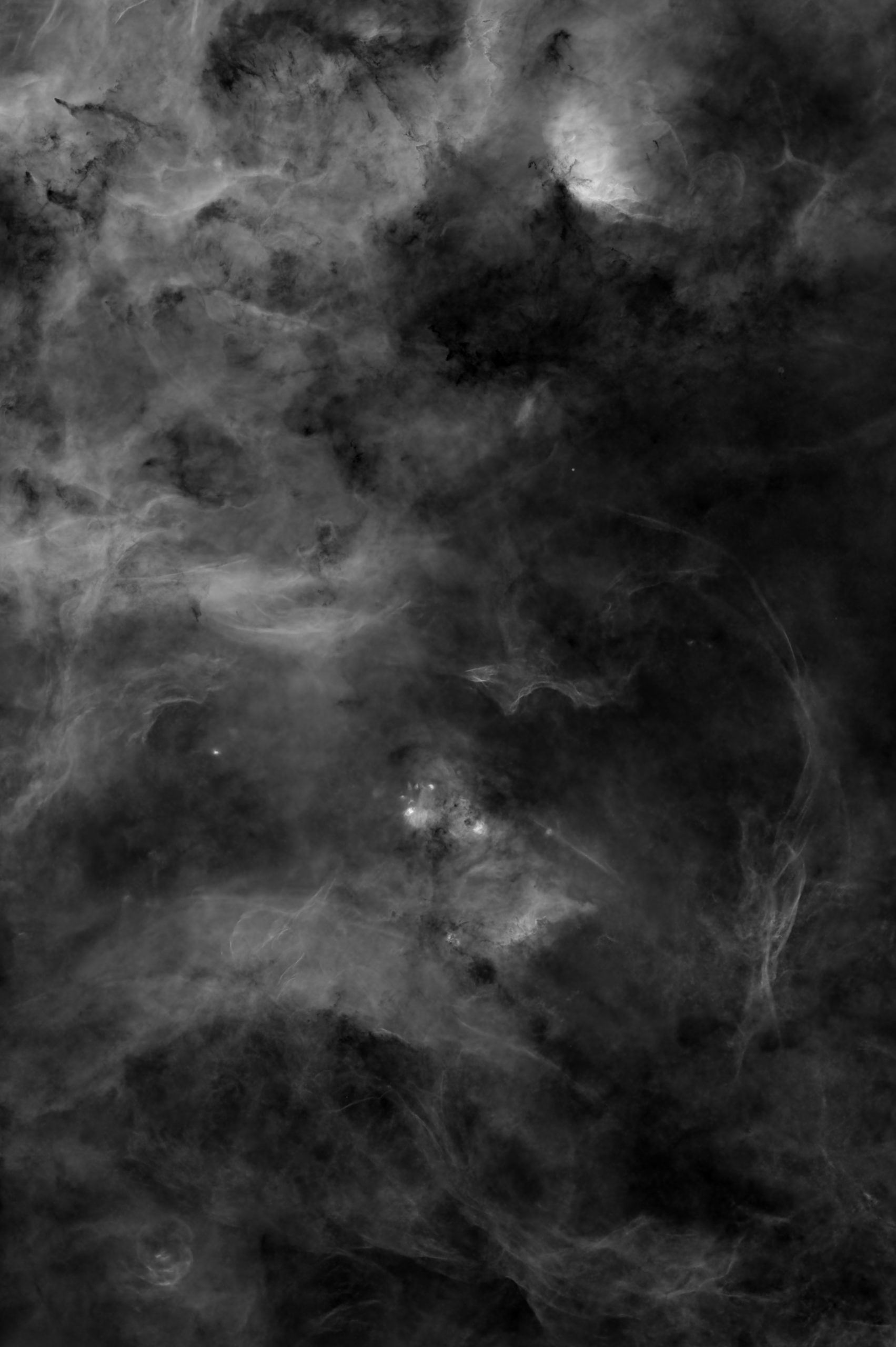
H-alpha
[O III]
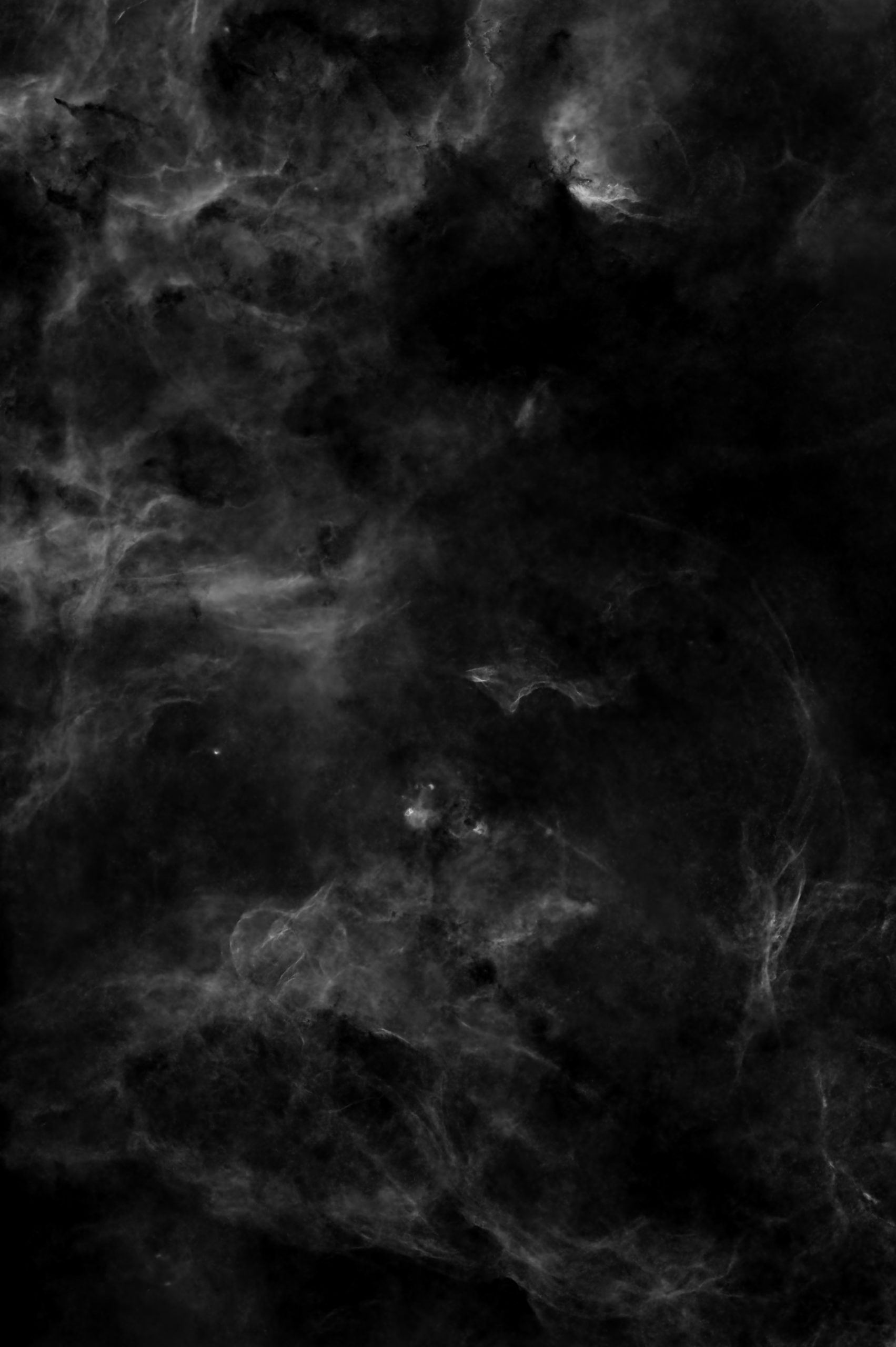
[S II]